Shared agreement made the process usable.
The workshop mattered because Design, Product, and Engineering defined the boundaries together. The tracker and checks gave that agreement a practical form.
We first taught designers to vibe code, then how to submit merge requests. Quick Wins Week gave them a chance to put those skills into practice: improve the Help Page and tackle small projects they already had in mind, with engineers supporting implementation and review.
Team delivery and organization-wide contributions are shown separately.
The Zero Trust Help Page became our shared project for the week, alongside small improvements designers already wanted to tackle. It had gone six years without a major refresh, despite handling approximately 30 million requests every day. That existing traffic made improving it a priority. People relied on it to check their protection status and troubleshoot connectivity, but it predated Kumo, Cloudflare’s current design system.
Legacy components, dense technical data, and weak visual hierarchy made essential information harder to scan. I co-authored the initiative brief with Engineering: modernize this high-traffic surface through focused improvements that designers could help ship.
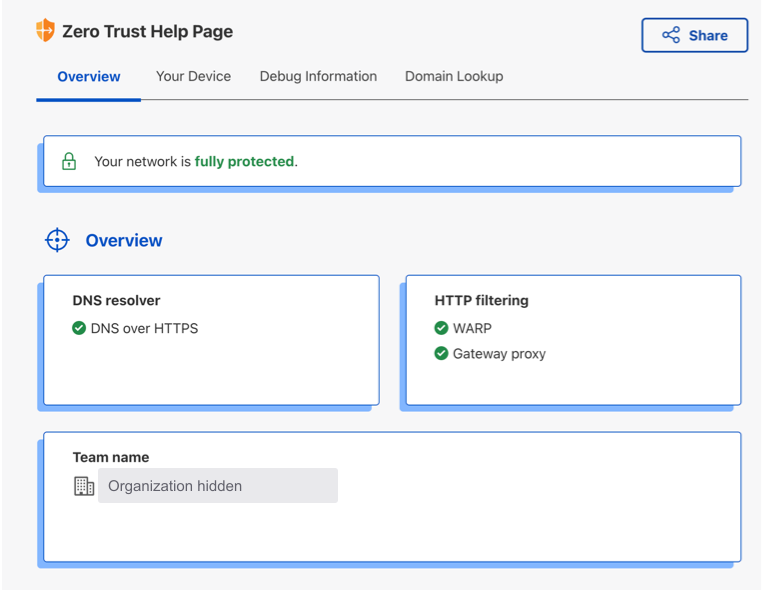
Original interface from the project brief. Organization information is masked.
Migrate to Kumo components, improve grouping and hierarchy, refresh spacing and typography, and clean up outdated content. Keep the underlying functionality unchanged.
23 to 25 March 2026 · build days
26 March 2026 · demo day
This traffic was already there before Quick Wins Week. A diagnostic page used at this scale needed a clearer, up-to-date experience.
Existing daily traffic, reported in the initiative brief. Requests, not unique users.I helped turn the learning into a practical team initiative. With engineering leadership, I organized a week where designers could apply their new skills to real work, get support when they needed it, and learn how to take a change through review.
Connect vibe coding and merge request training to a week of hands-on work on the Help Page and designers’ own improvement ideas.
Align with engineering leadership on scope, review expectations, and support before the week began.
Let designers and engineers define the practical workflow together, with clear ownership and a route to resolve blockers.
To support that hands-on week, a cross-functional workshop established which fixes were suitable, when to involve engineers, and what reviewers needed to see.
UI-only, small, reversible changes. No API or functionality changes.
Agree when Design, Product, and Engineering enter the process.
Before/after evidence, self-review, AI checks, and engineering approval.
Confirm ownership, support, and follow-up.
Workshop participants
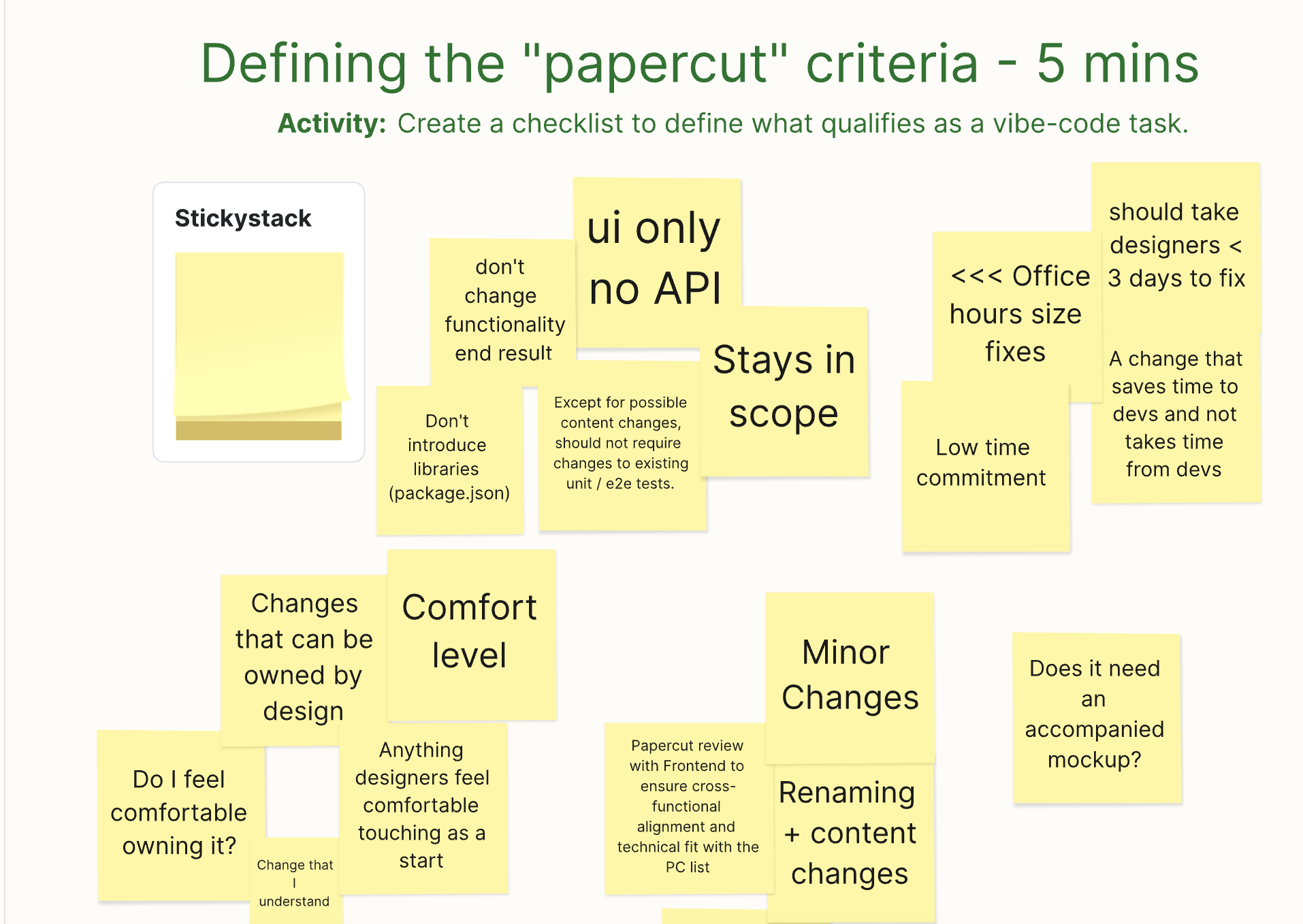
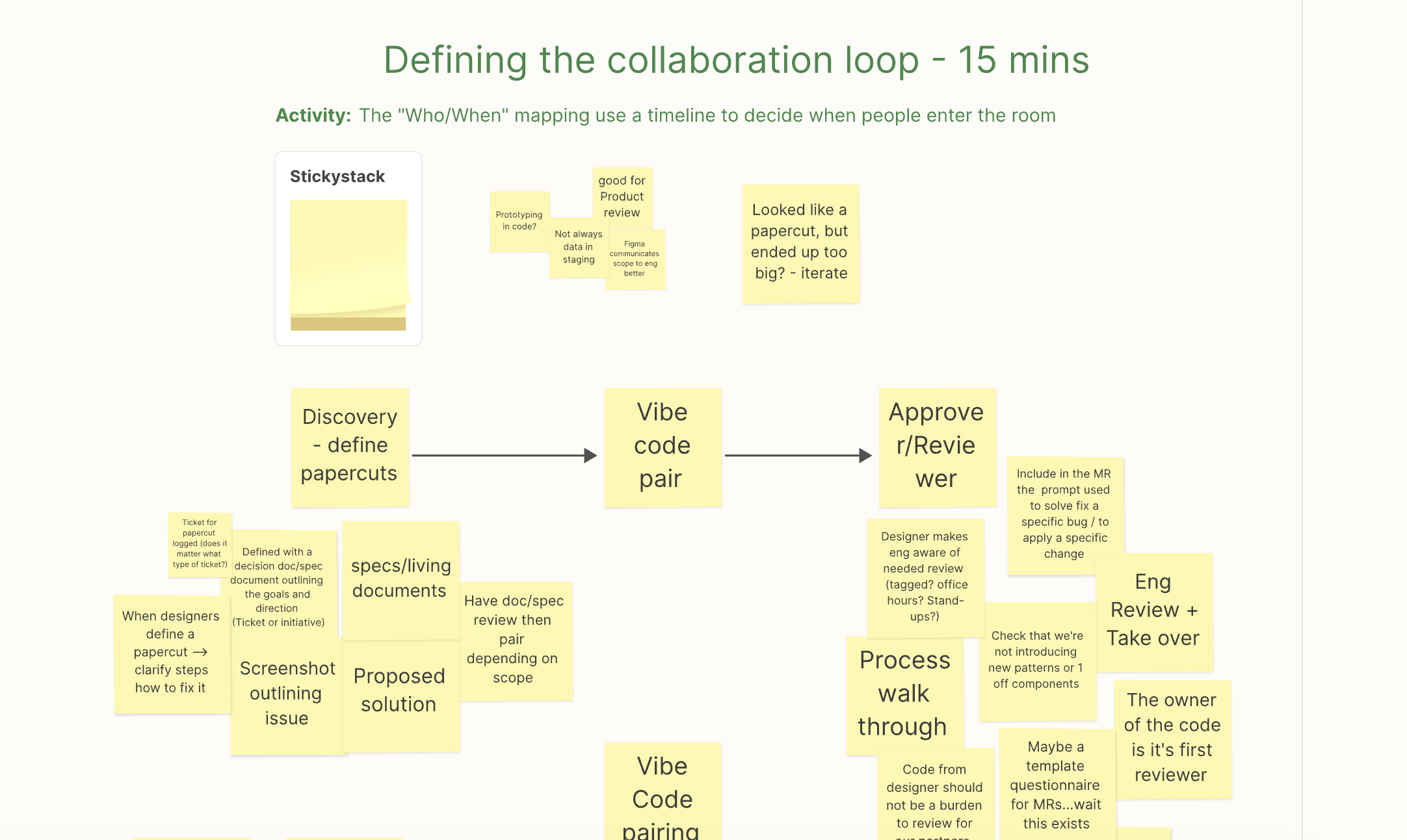
Small UI fixes compete for engineering time.

Designers contribute directly, within an agreed scope and review process.

Designers submitted candidates to a shared tracker before pairing. Each ticket had to meet the agreed criteria: UI-only, reversible, and without API dependencies. Engineering could see the incoming work and triage scope before implementation.
| Issue | Proposed change | Status at capture |
|---|---|---|
| Access cards used a hardcoded corner radius. | Replace the fixed value with the existing radius token. Visual change only. | Merged |
| Secondary text used a fixed gray that did not adapt to dark mode. | Use the semantic text color token, with no layout change. | In review |
Spend five minutes agreeing on the visual issue, the boundaries, and the expected outcome.
The designer uses AI to locate relevant components and propose changes. The engineer validates the approach and flags constraints.
The designer checks the interface locally and iterates on details and edge cases. The engineer watches for structural issues.
The designer opens a merge request with a clear description. An AI pre-check runs before engineering review and approval.
The shared pre-check example keeps changes within the UI layer. It flags server or API changes, authentication and access-control changes, new dependencies, and environment-variable changes.
Out-of-scope changes return to the designer with specific feedback before engineering review. The check supports human judgment; engineering retains approval.
The work reached production, including the refreshed Help Page shown below. Designers contributed implementation alongside their design work, with engineering review and approval.
The team also left with a documented workflow for choosing, implementing, and reviewing small UI fixes. It made the handoff and responsibilities explicit, rather than relying on individual arrangements.
The delivered page brings clearer hierarchy, Kumo components, and refreshed content to the same diagnostic tools: device and network status, client guidance, and troubleshooting.
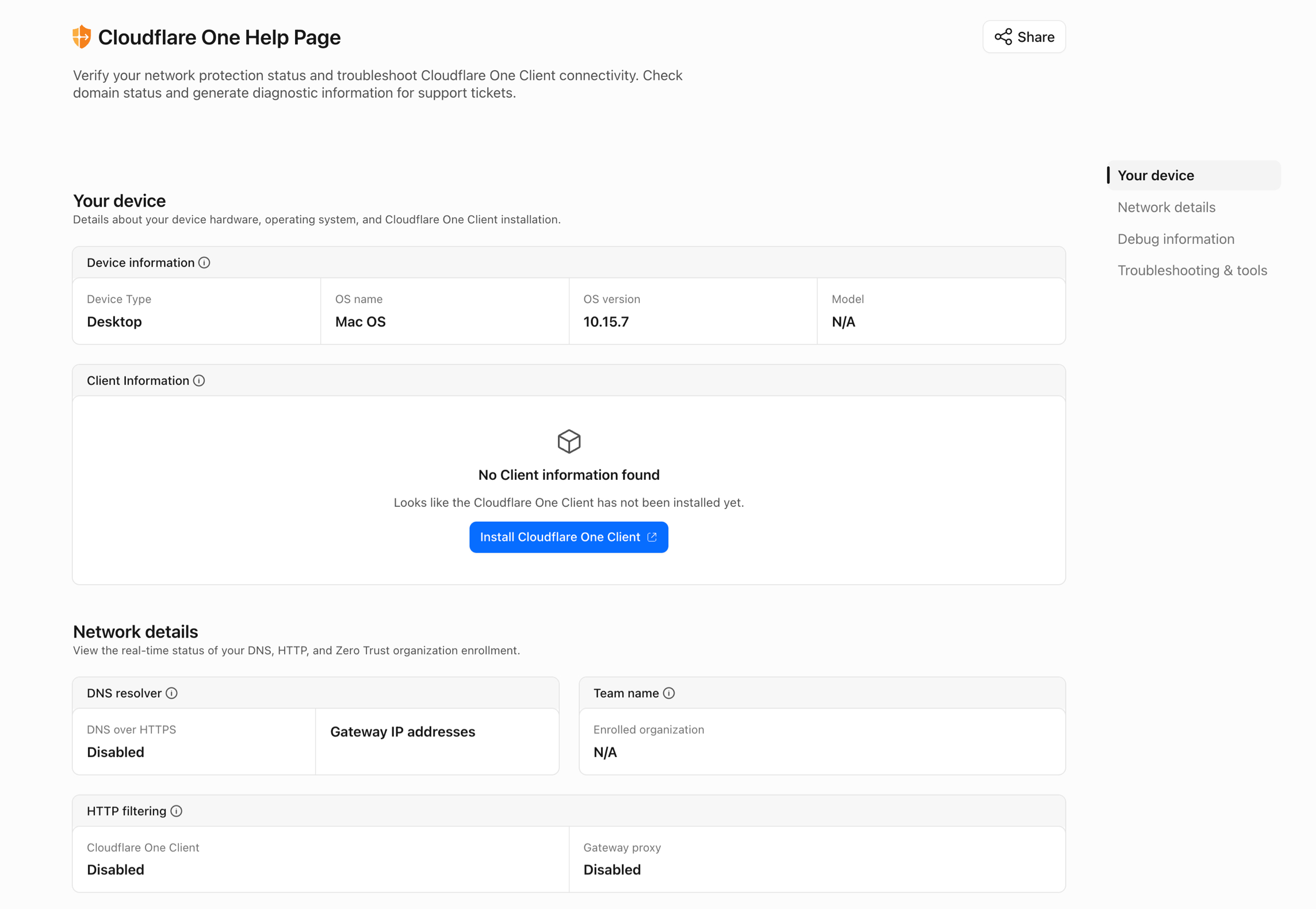
Delivered interface · diagnostic data omitted and protection banner removed for presentation. Select the image to view it at full size.
The workshop mattered because Design, Product, and Engineering defined the boundaries together. The tracker and checks gave that agreement a practical form.
Learning to generate code was the first step. Practicing merge requests, reviewing changes, and knowing when to ask an engineer for help connected that skill to the reality of shipping.
A first filter gave designers feedback before asking for engineering attention. Its value was also in making the collaboration feel supported, while keeping people accountable for the final decision.
My responsibility was to create the conditions for useful changes: small enough to understand, safe to reverse, and clear enough to review. That is what I would carry into the next initiative.
The Access Login experiment shows another side of my practice: using AI-assisted development myself to explore a customer problem through a working prototype.
SEE THE ACCESS LOGIN EXPERIMENT